
Medication Management: Streamlined Care for Busy Adults

Updated: Mar 28

Nearly one in five American adults report missing prescriptions or taking the wrong dose at least once a year. With such high stakes, managing medications safely and efficiently becomes a priority for families and professionals alike. Understanding medication management could make the difference between successful treatment and preventable complications. This article unpacks the essentials of organizing, monitoring, and improving prescription routines to empower better health and minimize risk.
Table of Contents
Key Takeaways
Point | Details |
Holistic Approach to Medication Management | Medication management involves a comprehensive system that prioritizes patient safety and treatment effectiveness through personalized strategies. |
Collaboration Between Stakeholders | Success hinges on the collaboration among patients, healthcare providers, and pharmacists to optimize medication use. |
Role of Technology | Telemedicine and smart monitoring systems enhance medication adherence and streamline communication, addressing traditional gaps in care. |
Addressing Common Challenges | Understanding and mitigating issues such as adherence, communication barriers, and complexity of regimens are vital for improving outcomes in medication management. |
Defining Medication Management in Healthcare
Medication management represents a comprehensive approach to organizing, tracking, and optimizing prescription treatments for individuals across various healthcare settings. At its core, this process involves systematically coordinating medication use to enhance patient safety, improve treatment outcomes, and minimize potential risks associated with complex pharmaceutical regimens.
The fundamental goal of medication management extends beyond simply prescribing drugs. It encompasses a holistic strategy that includes analyzing medication frameworks within self-management contexts, which helps healthcare providers create more personalized and effective treatment plans. This approach recognizes that patients play an active role in their medical care, requiring education, support, and tools to manage their prescriptions responsibly.
Key components of effective medication management typically include:
Comprehensive Medication Review: Evaluating all current prescriptions for potential interactions
Dosage Tracking: Monitoring correct medication amounts and timing
Side Effect Monitoring: Identifying and addressing potential adverse reactions
Medication Reconciliation: Ensuring accuracy across different healthcare providers
Patient Education: Teaching individuals about proper medication usage and potential risks
Successful medication management requires collaboration between patients, healthcare providers, and pharmacists. This multidisciplinary approach helps create a seamless system that prioritizes patient safety, treatment effectiveness, and overall health optimization. By implementing structured medication management strategies, individuals can better understand their treatments, reduce medication errors, and ultimately achieve more consistent and positive health outcomes.
Key Components and Steps Involved
Medication management involves a structured, comprehensive process that transforms prescription handling from a simple transaction to a nuanced, patient-centered approach. The core objective is creating a systematic framework that ensures medication safety, efficacy, and personalized treatment strategies.
Comprehensive medication management frameworks emphasize several critical steps that healthcare professionals and patients must collaborate on to optimize treatment outcomes. These steps are designed to create a holistic approach that goes beyond traditional medication dispensing.
The primary steps in effective medication management include:
Initial Assessment
Comprehensive patient medical history review
Current medication evaluation
Identification of potential drug interactions
Assessment of patient’s health goals and challenges
Medication Reconciliation
Verifying accuracy of prescription details
Confirming dosage and frequency
Checking for potential contraindications
Documenting all current medications
Patient Education
Explaining medication purposes
Demonstrating proper administration techniques
Discussing potential side effects
Providing clear usage instructions
Ongoing Monitoring
Regular follow-up consultations
Tracking medication effectiveness
Assessing patient response and potential side effects
Adjusting treatment plans as needed
Successful medication management requires active participation from both healthcare providers and patients. By implementing these structured steps, individuals can achieve more precise, safe, and personalized treatment experiences that prioritize their unique health needs and minimize potential risks associated with complex medication regimens.
Role of Telemedicine in Medication Management
Telemedicine has revolutionized medication management by providing innovative solutions that bridge the gap between patients and healthcare providers, especially for busy adults seeking convenient and efficient healthcare services. This digital approach transforms traditional medication oversight by leveraging technology to create more accessible, personalized, and proactive medical care.

Advanced telemedicine solutions integrate smart monitoring technologies that support medication adherence and reduce potential management challenges. These digital platforms enable real-time tracking, automated reminders, and seamless communication between patients and healthcare professionals, addressing critical gaps in traditional medication management approaches.
Key technological innovations in telemedicine medication management include:
Remote Prescription Management
Electronic prescription tracking
Secure medication order processing
Virtual consultation capabilities
Immediate prescription adjustments
Smart Monitoring Systems
Automated medication intake tracking
Real-time adherence monitoring
Intelligent alert systems for missed doses
Dynamic health data integration
Risk Mitigation Technologies
Comprehensive medication interaction screening
Proactive health risk identification
Personalized medication safety recommendations
The integration of telemedicine into medication management represents a significant leap forward in healthcare delivery. By combining technological innovation with patient-centered approaches, these digital platforms offer unprecedented convenience, precision, and personalization. Busy adults can now access comprehensive medication management services from the comfort of their homes, ensuring continuous, efficient, and responsive healthcare support that adapts to their unique lifestyle and health requirements.
Common Challenges and How to Avoid Them
Medication management presents numerous complex challenges that can significantly impact patient safety and treatment effectiveness. Understanding these potential pitfalls is crucial for developing proactive strategies that minimize risks and optimize healthcare outcomes.
Comprehensive risk management frameworks highlight the importance of identifying and addressing systemic inefficiencies in medication management. These approaches emphasize the need for a multifaceted strategy that combines technological solutions, patient education, and continuous monitoring to mitigate potential errors.
Key challenges in medication management include:
Medication Adherence Issues
Inconsistent medication scheduling
Forgetting to take prescribed doses
Misunderstanding medication instructions
Complexity of multiple medication regimens
Communication Barriers
Inadequate information transfer between healthcare providers
Limited patient understanding of treatment plans
Lack of clear follow-up mechanisms
Insufficient patient-provider communication channels
Technical and Systemic Challenges
Potential risks in medication self-management frameworks
Complex medication interaction scenarios
Polypharmacy complications
Inefficient tracking of medication effectiveness
Strategies to overcome these challenges involve a comprehensive approach that combines technology, patient education, and proactive healthcare management. By implementing smart monitoring systems, providing clear educational resources, and creating personalized medication management plans, patients can significantly reduce the risks associated with complex medication regimens. The key is to develop a collaborative, patient-centered approach that empowers individuals to take an active role in their healthcare while providing robust support systems to ensure medication safety and effectiveness.
Ensuring Safety, Compliance, and Cost Transparency
Ensuring medication safety, maintaining regulatory compliance, and providing transparent cost structures represent critical components of modern healthcare management. These interconnected aspects demand sophisticated approaches that protect patient interests while delivering high-quality, affordable medical care.
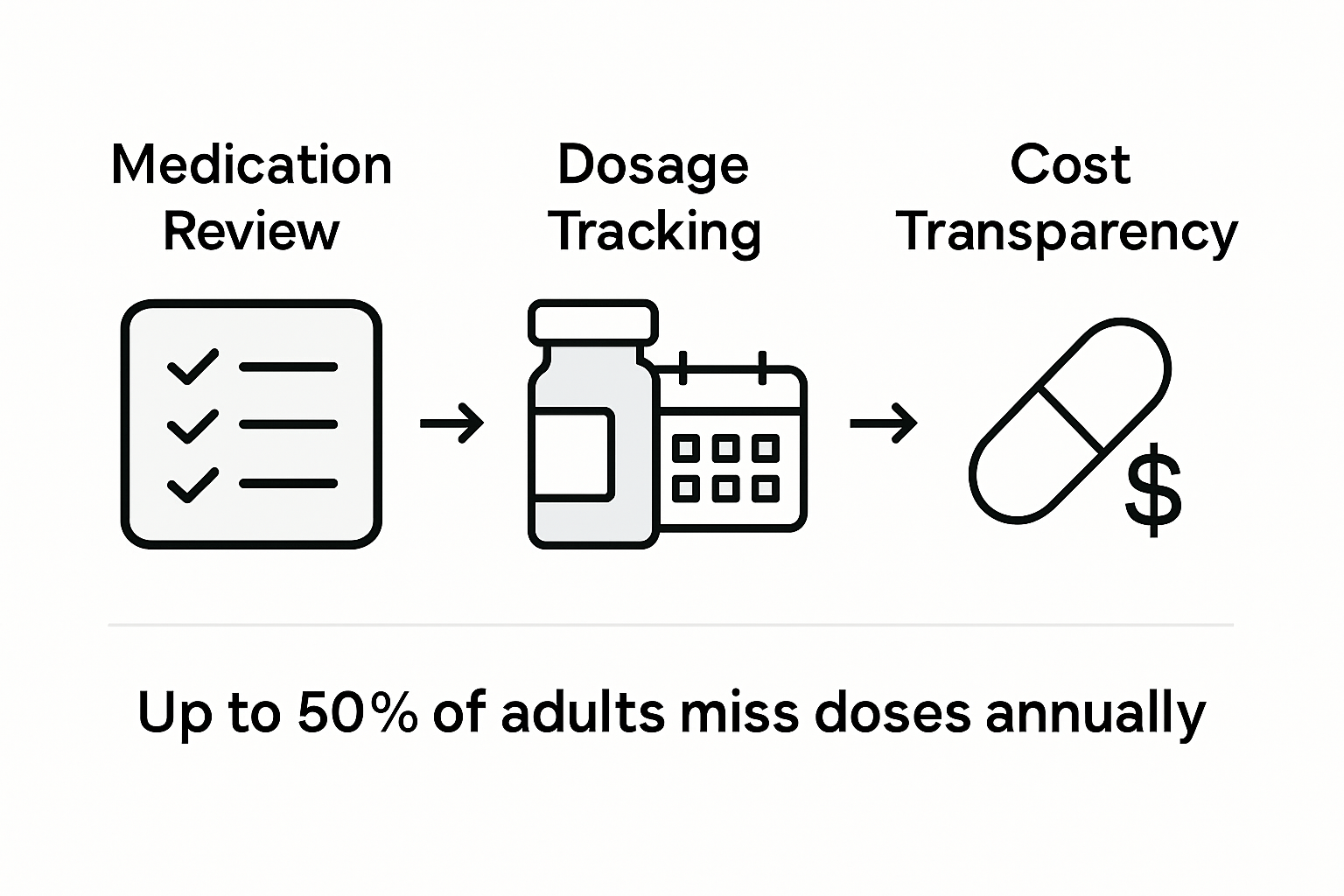
Advanced safety engineering frameworks leverage machine learning technologies to proactively identify and mitigate potential medication risks. These innovative strategies transform traditional reactive healthcare models into dynamic, predictive systems that anticipate and prevent potential complications before they emerge.
Key strategies for comprehensive medication management include:
Safety Protocols
Rigorous medication interaction screening
Continuous risk assessment mechanisms
Advanced electronic health record verification
Real-time adverse effect monitoring
Compliance Mechanisms
Standardized regulatory documentation
Systematic patient tracking
Automated compliance reporting
Transparent medical record management
Cost Management Approaches
Transparent pricing models
Personalized treatment cost analysis
Insurance compatibility assessments
Successful medication management requires a holistic approach that balances patient safety, regulatory compliance, and financial transparency. By integrating advanced technological solutions, healthcare providers can create comprehensive systems that protect patient well-being while delivering cost-effective, personalized medical care. The future of medication management lies in proactive, data-driven strategies that prioritize individual patient needs while maintaining the highest standards of medical excellence.
Simplify Medication Management with Guppy Meds
Managing medications can be overwhelming, especially when balancing busy schedules and complex prescriptions. The challenges of medication adherence, clear communication, and ongoing monitoring discussed in the article highlight the need for a seamless, patient-centered solution. Guppy Meds understands these pain points and offers a telemedicine platform that streamlines prescription care with privacy, convenience, and safety in mind.
Experience personalized treatment plans that fit your lifestyle. Whether you need support for weight loss, sexual health, or longevity therapies, Guppy Meds provides licensed healthcare providers for virtual consultations, prescription management, and delivery directly to your home through an FDA-registered compound pharmacy. This approach addresses key concerns such as medication adherence and education while eliminating time-consuming visits and travel.
Ready to take control of your medication management today? Explore how Guppy Meds can help you stay on track with your health goals through simple, subscription-based care designed for busy adults like you.
Discover a smarter way to manage your medications at Guppy Meds. Start your journey with easy online consultations and convenient medication delivery now at https://guppymeds.com. Learn more about how to optimize your treatment plans by visiting Guppy Meds online.
Frequently Asked Questions
What is medication management and why is it important?
Medication management is a comprehensive approach that organizes, tracks, and optimizes prescription treatments for individuals. It enhances patient safety, improves treatment outcomes, and minimizes risks associated with complex medication regimens.
What key components are involved in effective medication management?
Key components include comprehensive medication review, dosage tracking, side effect monitoring, medication reconciliation, and patient education. These elements work together to ensure safe and effective medication use.
How does telemedicine enhance medication management for busy adults?
Telemedicine enhances medication management by providing remote prescription management, smart monitoring systems, and seamless communication with healthcare providers. This technology offers convenience and personalized care, making it easier for busy adults to manage their medications.
What are common challenges in medication management, and how can they be avoided?
Common challenges include medication adherence issues, communication barriers, and technical challenges. To avoid these, patients can use smart monitoring systems, seek clear educational resources, and engage in proactive healthcare management.
Recommended


Comments