
Medical Compounding: Custom Medications for Modern Care

Updated: Mar 28

Over 30 million Americans rely on compounded medications every year for treatments that standard drugs simply cannot provide. As more American patients face unique medical needs, personalized pharmaceutical solutions are becoming a critical part of modern healthcare. Understanding the basics of medical compounding reveals how this approach delivers safer, more targeted therapies when traditional options fall short, empowering patients and providers with greater flexibility and control.
Table of Contents
Key Takeaways
Point | Details |
Medical Compounding Defined | Medical compounding is the practice of customizing medications to meet specific patient needs, unlike mass-produced drugs. |
Types and Uses | Compounded medications can take various forms and address diverse medical conditions, providing tailored solutions that traditional pharmaceuticals may not offer. |
Regulatory Oversight | Compounded drugs are not FDA-approved, emphasizing the importance of working with licensed professionals to ensure safety and quality. |
Benefits and Risks | While compounded medications provide personalized treatment options, they carry risks such as reduced regulatory oversight and potential contamination, necessitating careful patient-provider discussions. |
Defining Medical Compounding and Core Concepts
Medical compounding represents a specialized pharmaceutical approach where licensed professionals customize medications to meet unique patient requirements. Unlike mass-produced pharmaceuticals, compounded drugs offer personalized solutions that standard manufactured medications cannot provide.
At its core, medical compounding involves mixing, altering, or customizing medications to address individual patient needs. Pharmacists and physicians work together to create tailored treatments that might involve:
Adjusting medication dosage strengths
Removing specific allergens or ingredients
Creating alternative medication forms (liquid, cream, capsule)
Combining multiple medications into a single dose
It’s crucial to understand that compounded drugs are not FDA-approved, which means the agency does not verify their safety, effectiveness, or quality before they enter the market. This distinction makes working with licensed, reputable compounding professionals absolutely essential for patient safety.
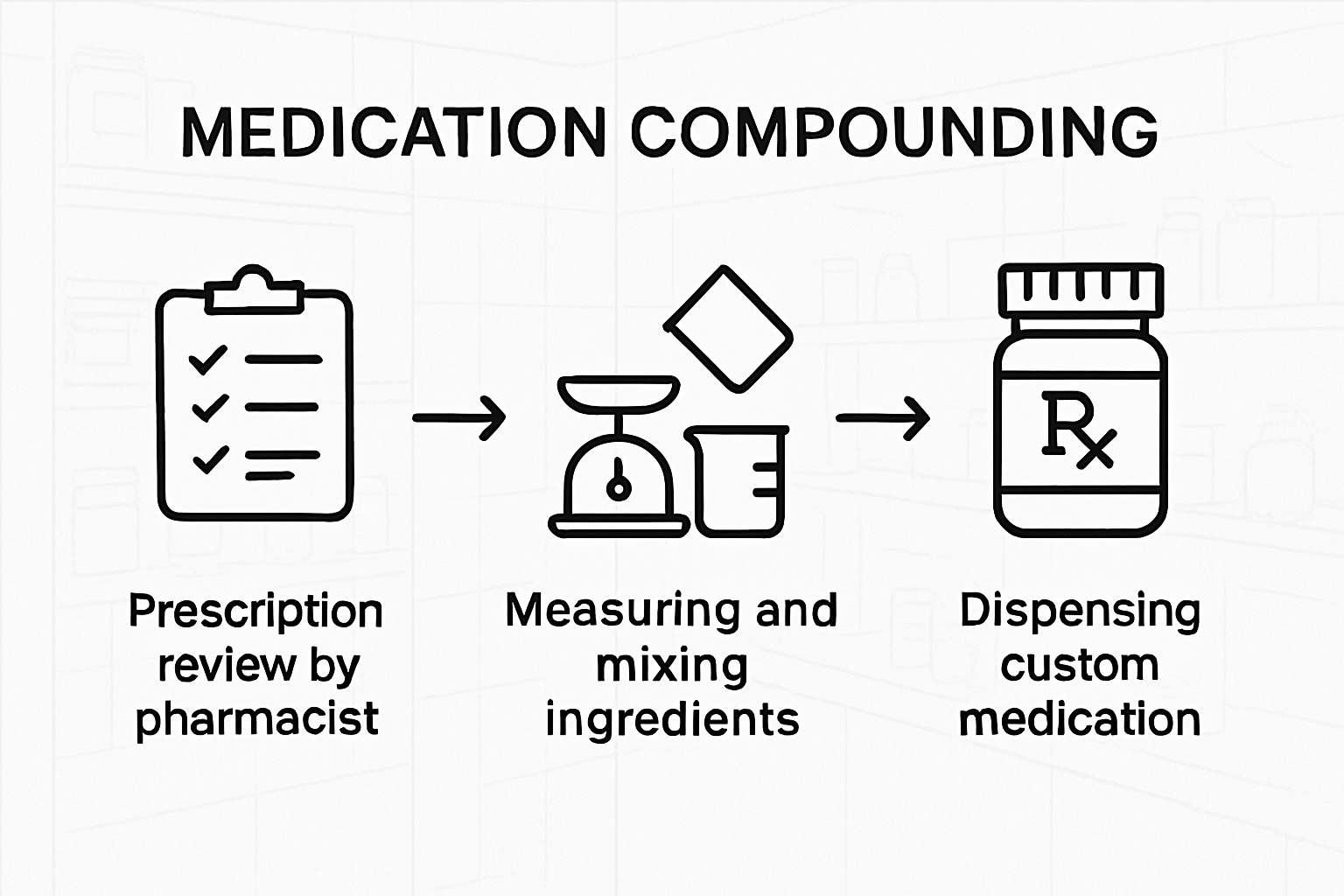
The compounding process requires significant expertise. Pharmacists must precisely measure, mix, and prepare medications using sterile techniques and professional-grade equipment. This meticulous approach allows for creating highly specialized treatments that can address complex medical conditions where standard pharmaceutical options fall short. Whether it’s adapting medications for patients with specific allergies, creating child-friendly dosage forms, or developing targeted therapies, medical compounding provides a flexible solution in modern healthcare.
Types of Compounded Medications and Their Uses
Compounded medications represent a versatile approach to personalized healthcare, offering patients tailored treatment options across multiple medical domains. These specialized medications can take various forms including capsules, tablets, oral liquids, topical creams, injections, and eye drops, enabling healthcare providers to address unique patient needs with precision.
The range of medical conditions treated through compounded medications is remarkably diverse. Research indicates that compounded products address numerous health challenges, including:
Bioidentical hormone replacement therapy (50% of compounded treatments)
Topical pain management solutions (23% of compounded products)
Thyroid disorder interventions
Sinus and nasal condition treatments
Dermatologic issue management
Migraine relief strategies
Sexual health support
Gastrointestinal disorder treatments
Each compounded medication is crafted with extraordinary attention to individual patient requirements. This approach allows healthcare professionals to modify medication strength, eliminate problematic ingredients, combine multiple treatments, or create alternative delivery methods that standard pharmaceuticals cannot provide. The flexibility of compounding enables more precise, targeted therapeutic interventions that can significantly improve patient outcomes and treatment experiences.
Medical Compounding Process and Key Features
Medical compounding represents a sophisticated pharmaceutical approach that requires meticulous precision and specialized expertise. Compounding involves altering FDA-approved drug products or combining bulk substances with excipients to create customized medications that address unique patient requirements with exceptional accuracy.

The process of medical compounding is strictly regulated and can only be performed by highly trained professionals. Compounded drugs are prepared by licensed pharmacists or physicians in state-licensed pharmacies, federal facilities, or specialized outsourcing facilities. These professionals follow rigorous protocols to ensure medication safety and effectiveness.
Key features of the medical compounding process include:
Precise ingredient measurement and combination
Sterile preparation techniques
Customization of medication dosage and form
Elimination of problematic ingredients
Creation of alternative medication delivery methods
While compounded medications offer remarkable flexibility, they require extensive professional expertise. Pharmacists must carefully select ingredients, maintain strict sterility standards, and understand complex pharmaceutical interactions. This intricate process allows healthcare providers to develop targeted treatments that address specific patient needs, ranging from pediatric dosing to allergen-free formulations, ultimately providing personalized medical solutions that traditional manufactured medications cannot achieve.
Regulations, FDA Oversight, and Pharmacy Standards
Pharmaceutical regulation in medical compounding represents a complex landscape of safety and quality assurance. Compounded drugs are not FDA-approved, which means the agency does not independently verify their safety, effectiveness, or quality before they enter the market. This unique status places extraordinary responsibility on compounding pharmacies to maintain rigorous internal standards.
To ensure patient safety, compounded medications must meet strict quality control requirements. These critical standards include:
Ensuring complete product sterility
Verifying precise ingredient measurements
Maintaining consistent medication concentration
Preventing cross-contamination
Documenting comprehensive preparation protocols
Compounding pharmacies operate under multiple regulatory frameworks, including state board of pharmacy regulations, federal guidelines, and professional association standards. These multilayered oversight mechanisms demand exceptional attention to detail, with pharmacists required to document every step of the compounding process. Specialized training, advanced quality control techniques, and ongoing professional education are essential to maintaining the highest levels of pharmaceutical integrity and patient safety.
Benefits, Risks, and Common Patient Concerns
Medical compounding offers unique advantages for patients with specialized healthcare needs, providing personalized medication solutions beyond standard pharmaceutical offerings. While compounded drugs offer personalized treatments, they come with critical considerations regarding safety and effectiveness, requiring patients to make informed decisions.
Compounded medications can address individual patient requirements unmet by traditional FDA-approved drugs, presenting both significant benefits and potential risks:
Benefits:
Customized medication dosages
Allergen-free formulations
Alternative medication delivery methods
Solutions for patients with specific medical restrictions
Personalized treatment approaches
Potential Risks:
Reduced regulatory oversight
Potential contamination risks
Possible dosing inconsistencies
Limited quality verification processes
Potential variations in medication potency
Patients considering compounded medications must engage in thorough discussions with healthcare providers, carefully weighing individual medical needs against potential risks. Professional guidance, comprehensive medical history review, and ongoing monitoring are essential to ensuring safe and effective personalized pharmaceutical treatments.
Experience Personalized Medication Solutions with Guppy Meds
Medical compounding offers customized treatments for patients with unique healthcare needs by adjusting dosages, eliminating allergens, and creating alternative delivery methods. However, navigating compounded medications can be challenging due to concerns about safety, dosing consistency, and regulatory oversight. Guppy Meds bridges this gap by combining expert telemedicine consultations with prescriptions dispensed from an FDA-registered compound pharmacy ensuring both quality and personalized care.
Discover how simple it is to access tailored medication plans from the comfort of your home. With Guppy Meds you can schedule virtual visits with licensed providers who understand your individual needs and deliver customized treatments directly to your door. Start improving your health with confidence and privacy today by visiting Guppy Meds. Take control of your care now and experience the benefits of medically compounded prescriptions designed specifically for you.
Frequently Asked Questions
What is medical compounding?
Medical compounding is a specialized pharmaceutical practice where licensed professionals customize medications to meet the unique needs of individual patients, unlike mass-produced pharmaceuticals.
What types of conditions can be treated with compounded medications?
Compounded medications can treat a variety of conditions, including hormone imbalances, pain management, thyroid disorders, migraines, and gastrointestinal issues, allowing for personalized treatment solutions.
Why are compounded drugs not FDA-approved?
Compounded drugs are not FDA-approved because they are customized medications created to meet specific patient requirements, meaning the FDA does not verify their safety, effectiveness, or quality before they enter the market.
What are the risks associated with using compounded medications?
The risks of using compounded medications include potential contamination, dosing inconsistencies, reduced regulatory oversight, and limited quality verification processes, making it essential to work with reputable compounding pharmacies.
Recommended


Comments