
Prescription Delivery Explained: Streamlining Home Access

Updated: Apr 7
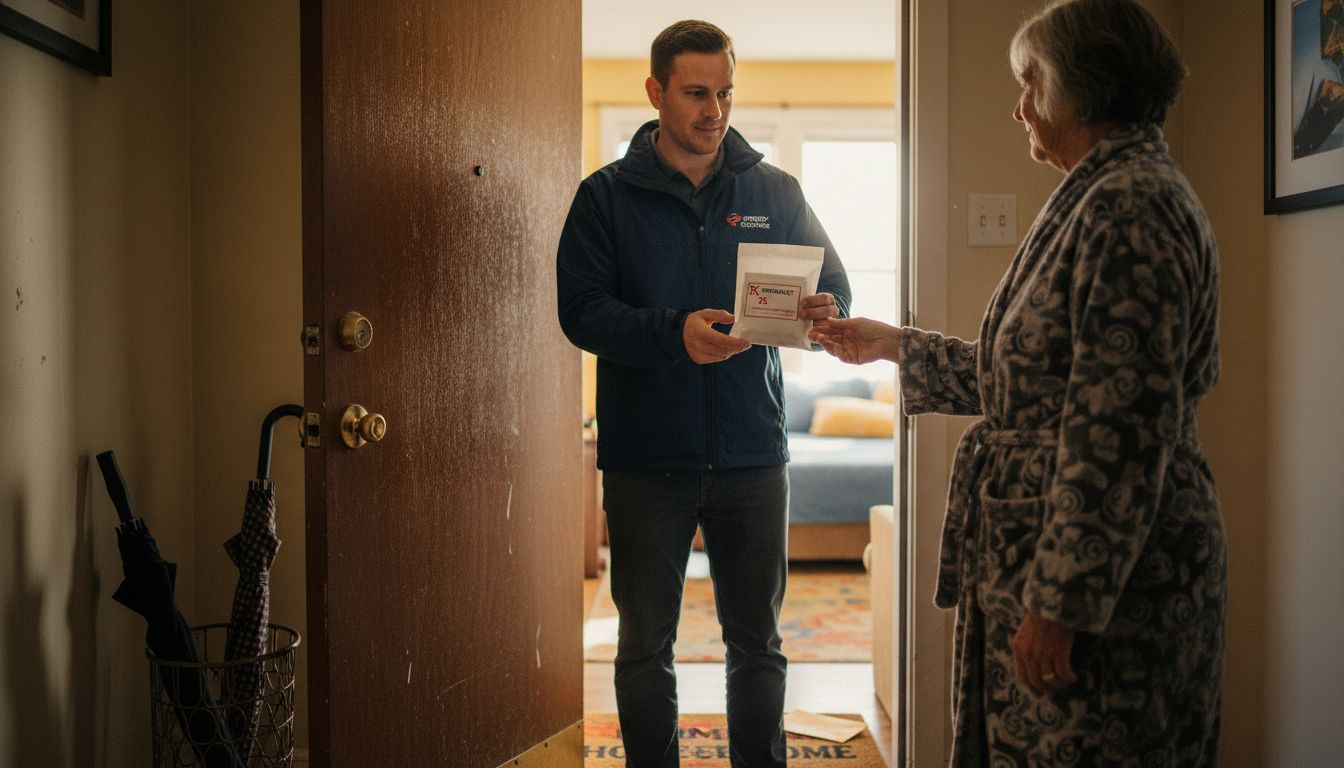
Nearly one in four American adults skip filling essential prescriptions due to time constraints or privacy concerns. For many balancing work, family, and personal health, traditional pharmacy pickups can be a major obstacle. Telemedicine makes it easier than ever to get expert care for weight management, sexual health, and longevity therapies delivered discreetly to your doorstep. Discover how streamlined home prescription delivery empowers Americans to prioritize their health without sacrificing privacy or convenience.
Table of Contents
Key Takeaways
Point | Details |
Telemedicine Advantages | Telemedicine platforms simplify access to prescriptions, delivering directly to patients’ homes. |
Privacy and Security | Patient information confidentiality is safeguarded by advanced regulatory frameworks. |
Delivery Models | Understand the differences between standard and specialty prescription deliveries for optimal care. |
Cost Awareness | Patients should evaluate service transparency and potential costs while navigating prescription delivery. |
Prescription Delivery in Telemedicine Platforms
Telemedicine platforms have transformed healthcare access by enabling direct prescription delivery to patients’ homes, eliminating traditional pharmacy visits and streamlining medical care. Federal policy extensions now allow telemedicine platforms to prescribe and deliver medications with unprecedented flexibility, making home prescription services more accessible than ever before.
The modern telemedicine prescription process involves several critical components. First, patients complete online medical consultations with licensed healthcare providers who assess their health needs. After a comprehensive evaluation, providers can electronically transmit prescriptions to specialized compound pharmacies that prepare and ship medications directly to the patient’s home. This workflow significantly reduces barriers to accessing specialized treatments like weight management medications, sexual health solutions, and longevity therapies.
Privacy and Security are paramount in these digital healthcare interactions. Advanced regulatory frameworks now govern telemedicine prescription delivery, ensuring patient information remains confidential while maintaining rigorous medical standards. These regulations cover cross-state care provisions, prescribing protocols, and secure transmission of sensitive medical data, giving patients confidence in the digital healthcare ecosystem.
Pro tip: Always verify your telemedicine platform’s HIPAA compliance and ensure they use encrypted communication channels for prescription management and personal health information.
Electronic Prescribing and Pharmacy Fulfillment Steps
Electronic prescribing has revolutionized medication management by creating a seamless digital pathway from healthcare provider to patient. Electronic prescription systems securely transmit prescription data through sophisticated verification and screening processes, dramatically improving healthcare efficiency and patient safety.
The workflow of electronic prescribing involves multiple critical stages. Healthcare providers first enter prescription details into secure digital platforms, which automatically perform real-time checks for potential drug interactions, patient allergies, and insurance coverage. The e-prescribing process includes comprehensive decision support tools that screen for contraindications and validate medication appropriateness before electronically transmitting the prescription to specialized compound pharmacies.
Once a prescription is transmitted, compound pharmacies initiate a meticulous fulfillment process. This includes verifying prescription details, preparing custom medications, and arranging secure shipping directly to the patient’s home. Advanced tracking systems ensure patients receive timely notifications about their medication status, providing transparency and peace of mind throughout the delivery process. These platforms integrate patient communication channels, insurance verification, and precise medication management to streamline home healthcare delivery.
Pro tip: Always request a medication delivery confirmation and maintain a digital record of your electronic prescriptions for personal healthcare tracking.
Types of Prescription Delivery: Standard vs. Specialty
Prescription delivery encompasses two primary models that serve different patient needs and medication complexities. Standard prescription delivery channels support common medications through typical pick-up or mail-order procedures, providing straightforward access to routine pharmaceutical treatments for most patients.
Specialty pharmaceutical delivery represents a more intricate healthcare service designed for complex medical conditions. These delivery systems involve sophisticated logistics for medications requiring specialized handling, advanced patient monitoring, and targeted insurance navigation. Unlike standard delivery, specialty pharmacies offer enhanced support for patients managing chronic, rare, or severe health conditions, including home infusion services and customized medication packaging.
The key differences between standard and specialty prescription delivery extend beyond simple medication transmission. Specialty pharmacies maintain limited distribution networks, provide more intensive patient follow-up, and often coordinate closely with healthcare providers to ensure optimal treatment outcomes. These services become crucial for patients requiring medications with complex administration protocols, strict storage requirements, or those needing ongoing clinical management.

Here is a side-by-side summary of standard and specialty prescription delivery models:
Aspect | Standard Delivery | Specialty Delivery |
Medication Types | Common, routine prescriptions | Complex, high-cost medications |
Patient Support | Basic service and guidance | Ongoing clinical monitoring |
Packaging & Shipping | Regular packaging; standard shipping | Specialized, temperature-controlled |
Insurance Coordination | Typical insurance claims process | Hands-on, tailored insurance navigation |
Distribution Network | Broad pharmacy access | Limited, exclusive partnerships |
Pro tip: Always confirm your specific medication’s delivery requirements with your healthcare provider to understand whether standard or specialty delivery best suits your treatment plan.
Legal and Safety Standards for U.S. Prescription Delivery
Prescription delivery in the United States operates under stringent legal frameworks designed to protect patient safety and medication integrity. The Food and Drug Administration (FDA) enforces comprehensive drug safety standards that govern all prescription medication distribution, ensuring rigorous quality control for medications delivered directly to patients’ homes.
Regulatory compliance involves multiple critical components that safeguard patient health. These standards mandate precise requirements for drug authentication, tamper-proof packaging, patient information disclosure, and continuous surveillance. Unified standards codified in the Federal Food, Drug, and Cosmetic Act establish mandatory protocols for drug quality, purity, and package integrity, which apply equally to traditional pharmacies and emerging telemedicine delivery platforms. Healthcare providers and pharmacies must adhere to these regulations to prevent misbranding or medication adulteration.
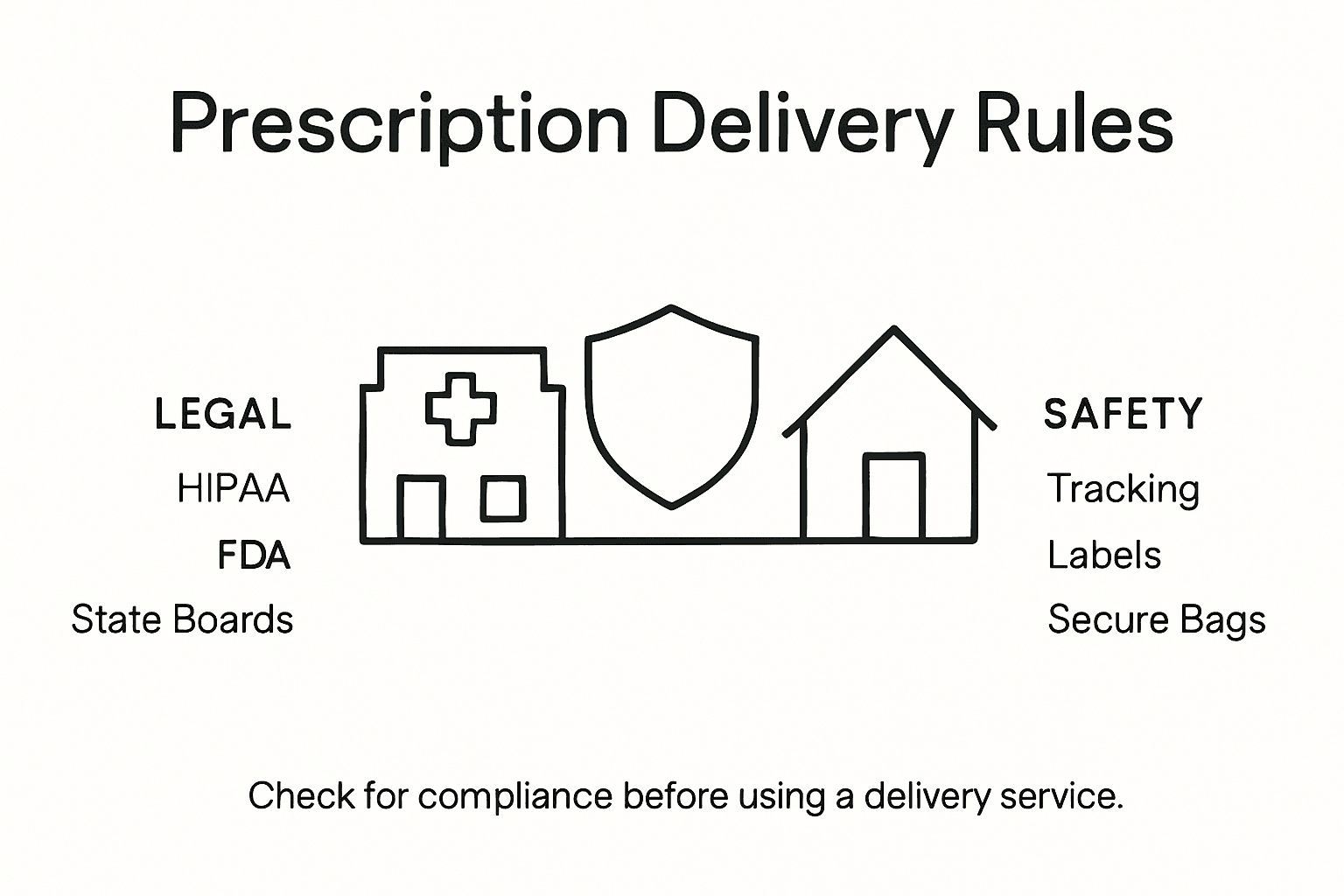
The legal landscape for prescription delivery continues to evolve, particularly with the rise of telehealth services. Modern delivery systems must navigate complex requirements that balance patient convenience with stringent safety protocols. This includes verifying prescriber credentials, maintaining secure transmission of medical information, implementing robust tracking mechanisms, and ensuring medications remain uncompromised during transportation. Compliance is not optional but a fundamental requirement for any prescription delivery service operating in the United States.
Here’s a breakdown of the main legal and safety requirements for U.S. prescription delivery services:
Requirement | Purpose | Enforced By |
Drug Authentication | Prevent counterfeit medications | FDA, DEA |
Tamper-Proof Packaging | Ensure drug integrity during transport | FDA, USP |
Prescriber Verification | Confirm only licensed professionals prescribe | State boards, FDA |
Secure Data Transmission | Protect patient health information | HIPAA, HHS |
Compliance Documentation | Prove adherence to federal/state laws | FDA, state agencies |
Pro tip: Always verify your prescription delivery service’s FDA and USP compliance credentials to ensure maximum safety and legal protection.
Cost, Access, and Common Pitfalls to Avoid
Prescription delivery presents a complex landscape of opportunities and challenges for patients seeking convenient healthcare solutions. Home prescription services can offer significant cost savings, but they also introduce potential risks that require careful navigation, demanding patient vigilance and strategic decision making.
Prescription drug costs in the United States represent a significant barrier to healthcare access. Current healthcare economics reveal dramatic price disparities compared to other countries, contributing to complex affordability challenges, with insurance coverage, benefit designs, and medication shortages creating substantial obstacles for patients. These systemic challenges make it crucial for patients to carefully evaluate prescription delivery services based on transparency, network limitations, and potential cost-saving mechanisms.
Patients must remain alert to potential pitfalls when exploring prescription delivery options. Red flags include pharmacies without verifiable U.S. licensing, offers that seem unrealistically cheap, lack of prescription requirements, and websites without clear pharmacist contact information. Protecting personal health information, verifying platform legitimacy, and understanding insurance coverage become essential steps in safely accessing home prescription services. Smart consumers conduct thorough research, confirm regulatory compliance, and prioritize platforms demonstrating robust security protocols.
Pro tip: Always request a detailed breakdown of potential medication costs and verify your prescription delivery platform’s insurance network compatibility before committing to a service.
Simplify Your Prescription Delivery with Guppy Meds Today
Accessing prescription medications from home should be safe, private, and straightforward. This article highlights key challenges like navigating complex legal standards, ensuring medication safety, and understanding specialty versus standard delivery methods. Guppy Meds addresses these concerns by combining licensed healthcare providers with an FDA-registered compound pharmacy to deliver secure, personalized treatments right to your door. Whether you need expert support for sexual health or targeted therapies, the platform’s streamlined telemedicine model eliminates common barriers like long waits and complicated insurance navigation.
Take control of your health with a service designed for busy individuals who value convenience and privacy. Visit Guppy Meds to schedule your virtual consultation and start your customized prescription delivery. Experience how telemedicine and expert pharmacy fulfillment come together to provide peace of mind and better healthcare outcomes.
Frequently Asked Questions
What is the process for getting prescriptions delivered through telemedicine platforms?
The telemedicine prescription delivery process starts with an online consultation with a licensed healthcare provider who assesses your health needs. After the evaluation, the provider electronically transmits your prescription to a specialized pharmacy that prepares and ships the medication directly to your home.
How do telemedicine platforms ensure the privacy and security of my medical information?
Telemedicine platforms adhere to advanced regulatory frameworks to maintain patient confidentiality, including strict HIPAA compliance. They utilize encrypted communication channels for transmitting personal health information, ensuring your data remains secure throughout the prescription process.
What are the differences between standard and specialty prescription delivery services?
Standard prescription delivery typically covers common medications with basic service support, while specialty prescription delivery provides enhanced support for complex medications needing specialized handling or patient follow-up. Specialty pharmacies often coordinate closely with healthcare providers and offer additional services like home infusion.
What legal standards govern prescription delivery in the U.S.?
Prescription delivery services in the U.S. operate under stringent legal frameworks enforced by the FDA. These regulations include drug authentication, tamper-proof packaging, secure data transmission, and prescriber verification to ensure patient safety and medication integrity.
Recommended


Comments